
Shoes for Stabilization: Reece's Range-tested Picks
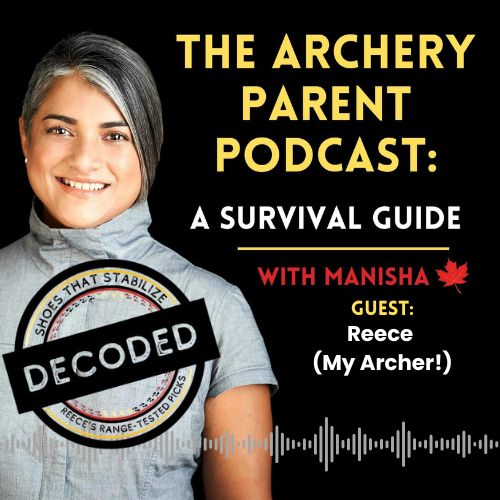
The Essential Role of Footwear: A Conversation with Reece (Comprehensive Episode Recap)
Welcome back, Archery Family! Today’s blog post is a truly special one. If you’ve been following the Archery Parent Podcast, you know that this journey began with a single arrow and a lot of questions from a mom trying to navigate the complex world of Archery. Well, in our newest episode we are going behind-the-scenes with the very person who started it all for me: my son, Reece Wilson-Poyton.
Reece isn’t just my "Archer"; he is a Canadian National Recurve Team Member, a dedicated Coach, and a wealth of knowledge when it comes to the technical side of the sport. This episode is the first of two episodes featuring Reece. In this installment, we are digging deep into a foundation that many Archers (and parents) overlook: Footwear.
And, that's not all! Stay tuned for our next episode where Reece and I do a full rundown of equipment for beginners, ensuring you have the right roadmap for those first critical gear purchases.
But first, let’s talk about why your shoes might be the silent saboteur of your Archer's shooting form.
The Foundation of the Shot: Why Shoes Matter
Archers (<ahem!> their parents and supporters) spend countless hours and thousands of dollars on the "top half" of the kit. Everyone obsesses over limb poundage, the clicker, and the weight distribution of stabilizers. But as Reece points out in this episode, all that high-end technology is sitting on top of a human being who is standing on the ground.
If an Archer's foundation is unstable, their shot will be too. Reece explains that footwear is an essential, yet frequently ignored, part of an Archer's kit. From his experience as both a high-level international competitor and a Coach, he has seen numerous performance problems (like inconsistent balance) that were either caused or significantly worsened by footwear.
Reece emphasizes that Archery is not just an upper-body sport; it is a “ground-up” sport where the quality of an Archer’s base (from feet to hips to shoulders) directly affects stability and performance.
The right shoe can help an Archer feel planted, balanced, and connected to the ground, which becomes especially important over long competition days, in wind, and on uneven shooting lines. He notes that while beginners may not notice shoe differences right away, footwear quickly rises in priority as body awareness and technical refinement improve.
What Makes an "Ideal" Archery Shoe?
Many parents assume that a good pair of running sneakers are the best bet for the range. However, Reece breaks down why this common misconception can actually hurt an Archer’s performance.
Running shoes are designed for forward motion and shock absorption. They are often "bouncy" and have a significant "drop" (meaning the heel is much higher than the toe). Archer’s aren't moving forward (except when retrieving their arrows). They are trying to remain perfectly still.
Therefore, Reece recommends shoes with flat soles. This structure allows the Archer to feel the ground and maintain a consistent centre of gravity. From Reece’s experience, an ideal Archery shoe generally has a low heel-to-toe drop, a wider toe box, and enough cushioning to get through long days without sacrificing stability.
He prefers weightlifting or workout-style shoes that are close to “barefoot” in feel with approximately a 2 mm drop, wide enough to let the toes spread, and flexible enough to adapt to uneven range surfaces while still offering some padding. In contrast, many typical running shoes are higher in the heel and narrower, which he finds can tilt the Archer forward, reduce ground contact, and make balance feel wobbly, especially during long shooting sessions.
Daily Shoes vs. Dedicated Archery Shoes
Reece strongly recommends having a dedicated pair of Archery shoes that stay in the bow case or bow bag rather than using everyday shoes for the range. Keeping Archery shoes separate helps preserve their performance and keeps them clean and dry, especially during Canadian winters with snow, slush, and “gross weather.”
Over time, many Archers end up falling in love with their Archery shoes so much that they become their daily pair, but Reece still prefers preserving a consistent on-the-line feel by having a specific range shoe.
Fit, Feel, and Proprioception
“Low-drop” or “zero-drop” shoes can help keep Archers closer to the ground and improve balance awareness. A wider toe box lets toes spread, improving stability and helping Archers feel subtle shifts in their weight. Even a small change in shoe height can make an Archer feel “too high” and wobbly compared with their usual footwear, as Reece noted when he forgot his Archery shoes for league night.
Extremely minimal or barefoot shoes can feel very stable but may cause significant foot fatigue on long shooting days. Reece noted that changing to this type of shoe does need some time to build up familiarity and endurance.
Each Archer needs to find the best shoe for themselves, considering a middle ground: enough cushion for long events, with stability and performance as the main priority.
When to Replace Shoes
Change shoes when there is a loss of cushioning, structural breakdown, or visible damage at the heel and especially the sole. Once support, balance, and comfort has been compromised, a pair of shoes can hinder performance and should be replaced.
Weather, Rules, and Wet Range Days
Shoe safety basics: Most ranges require closed-toe shoes. Sandals and flip-flops are not permitted. For any tournaments that are sanctioned by a National organization or World Archery, closed-toed shoes are mandatory. An Archer will be asked to change footwear or not participate.
For rain: waterproof over-the-shoe covers can preserve both dryness and the familiar feel of an Archer’s main shoe, but many Archers choose to change their shoes to a rubber boot, a waterproof shoe, or a hiking-style shoe to say dry.
Reece avoids mid-round shoe changes when possible to maintain consistent balance and shot feel.
Shoe Types and Models to Consider
Common choices: Converse, Vans, basketball shoes, barefoot runners, and training/workout shoes. Barefoot brands like Altra can work well for those who want close-to-ground feel with some protection and tread.
Reece’s range-tested recommendation for all-around Archery performance:
Workout/training shoes:
- Under Armour Reign
- Adidas Dropset
- Nike Metcon
Budget Guidelines
Reece shared that a solid Archery shoe can run from $100–150 CAD, with premium models above that. Shoes should not be the very cheapest item in an Archer’s kit, given that they form the foundation of every shot.
Indoors, Outdoors, 3D, and Field
Using the same shoe indoors and outdoors helps maintain a consistent feel.
Outdoor 3D and Field events often call for more rugged, waterproof hiking-type shoes with strong grip for slopes, mud, and loose ground. Reece noted that safety and traction often outweigh the shoe needs of Target Archery.
Core needs regardless of discipline: stability, balance, and ground awareness.
Reece does not see a strong reason to change shoes by discipline but plans to explore more once he experiments beyond high-performance Recurve.
Reece’s Future Tech Wish List
When asked what features Reece would want in an Archery-specific shoe, if there was no limit to technology, he answered a shoe with embedded sensors that map weight distribution across the shot cycle. This feature would benefit Archers and Coaches.
He also noted that any such tech would likely be used for training purposes only, not competition, due to equipment rules and regulations.
"Quick Reference" Guide for Archery Footwear
Heading to the store this weekend to take a look at shoes? Keep this checklist handy to make the best investment for your Archer:
- Prioritize Stability: Look for a shoe that allows your Archer to even their weight distribution across their whole foot (or as much as possible).
- Check the Heel: The heel should feel snug and secure to prevent any sliding inside the shoe during the shot.
- Indoor vs. Outdoor Needs:
- Indoor: Focus on grip for floors and flat soles for maximum stability.
- Outdoor: Prioritize waterproofing, traction for grass/mud, and consider ankle support for uneven terrain.
- The "Done" Test: A shoe is finished when the internal support collapses or the tread is gone, even if it still fits length-wise.
- Regulation Check: Always double-check tournament rules before using spiked footwear like golf shoes on the line. Go for soft spikes or spikeless over metal.
The Secret Weapon: Golf Shoes and Wet Conditions
One of the most fascinating parts of our conversation centred on Golf Shoes. When outdoor ranges get wet and muddy, regular running shoes can quickly become wet and potentially a safety hazard.
Reece explains that golf shoes are often a superior option for Archers in wet conditions because they offer built-in waterproofing and specialized grips designed to keep a person stable while rotating or standing on grass.
For those who don’t like to change their shoes mid-round, it can be helpful to find waterproof shoe covers that enable an Archer to still wear their shoes, allowing for the same “feel”, but be more comfortable when the weather changes.
Indoor vs. Outdoor: Do You Need Two Pairs?
While a single pair of good shoes can get a beginner through their first season, Reece suggests that as an Archer progresses, dedicated shoes for indoor and outdoor environments become more important. Indoor shooting is all about the "feel" of the floor, while outdoor shooting requires the same plus protection from the elements and stability on uneven ground.
Wrapping Up: The Journey Continues
This episode with Reece was a trip down memory lane, but more importantly, it was a masterclass in the technical details that separate a recreational Archer from a competitive athlete. Whether you are a parent looking to help round out your Archer’s kit or an Archer looking for potential extra points on your scorecard, the right shoes can be a game-changer.
Don't stop here! Our next episode is the perfect companion to this one. Reece will give us a comprehensive rundown of beginner equipment, helping you navigate the confusing world of risers, limbs, and arrows. He breaks down gear in an approachable, budget-aware way for new Archers and their parents.
Connect with the Podcast:
- Email: archeryparentpodcast@gmail.com
- Instagram: @ArcheryParentPodcast
- Web: ArcheryParentPodcast.ca

The Archer’s Pathway to LA2028: The Qualification Framework
