
Blueprinting The Shot: A Parent's Guide with Joel Turner
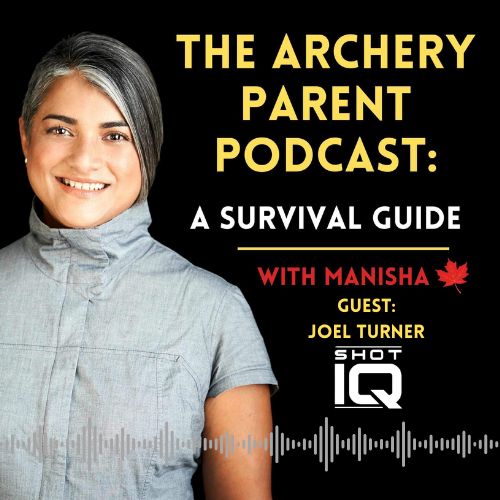
How To Support Your Archer’s Mental Game: Lessons From Joel Turner
Are you unintentionally making Archery tournaments harder than they need to be?
As Archery parents, it is easy to obsess over equipment, form, and scores while missing the one skill that quietly controls everything your Archer does on the line: their mental game.
In a powerful episode of the Archery Parent Podcast, Joel Turner (creator of SHOTIQ and MINDIQ, Barebow Archer, and Archery Dad to Pro Archer Bodie Turner) explains how an Archer’s mind really works under pressure and how parents can finally support it in a meaningful, practical way.
Meet Joel & the Turner Family
Joel Turner is “one of us”. He is an Archery parent who has lived the highs and lows at tournaments, in practice, and on long drives home.
Archery has been Joel’s life since age seven, when he first picked up an old Bear Recurve and became “mystified” by the flight of the arrow. That fascination never left. His Archer is Compound Archer Bodie Turner.
Bodie has been on the biggest stages holding giant prize cheques, but behind those wins is something more important than perfect form: it’s a mind that was deliberately built from day one.
Sarah Turner is known as Mama_ShotIQ on Instagram and Threads. She supports Joel and Bodie through it all, tournament to tournament, and contributes to our episode at the end. Thanks, Sarah!
Why Archery Is “Just Shy Of Impossible” For Archers
Joel is blunt about what Archery really demands. When an Archer stands on the line, they are being asked to override their own central nervous system…on purpose and on command.
Most Archery parents are trying to help their Archer do something “just shy of impossible” without ever having stood on that line themselves. They see the tears, the frustration, the Archer who shoots lights‑out at home and falls apart at the venue. When parents see this, they feel helpless.
Joel reframes Archery as “the highest of high in human concentration.” He argues that every tournament is really a masterclass in mental skill development disguised as a scorecard. The real skill is not 10‑rings and Xs. It is the ability to get loud in with the right words at the right moment.
Thoughts vs. Thinking: The Foundation Of The Archery Mental Game
One of the most important concepts shares is Joel’s distinction between thoughts and thinking:
- Thoughts are what Archer hears inside Archer’s head: “I’m going to embarrass myself,” “Everyone is watching,” “Don’t miss.” Thoughts have no strategy and offer no solution.
- Thinking is what an Archer deliberately says to themself: “Here I go,” “Easy now, a little bit,” “Stay in that squeeze.” Thinking can instruct and solve problems.
Joel teaches this as the first of his “Four Pillars of How”, a framework he uses to explain how humans do anything under stress:
- Thoughts aren’t thinking.
- The ultimate skill of the human being is the ability to get loud with the right words at the right moment.
- The mind controls movements through Open Loop and Closed Loop systems.
- The Mental Game Equation tells an Archer where to put their conscious mind: when and how.
As an Archery parent, you cannot control your Archer’s thoughts. Neither can your Archer. Those thoughts of “I hope I don’t miss” are coming whether you like it or not. But your Archer can always control the volume of their thinking. When an Archer’s own voice becomes the loudest voice in the room, the mental game shifts in their favour.
Why “Just Relax, It’ll Be Fine” Backfires
Five minutes before the whistle, an Archer is often nervous. Their heart is pounding and their bow hand is buzzing. Many Archery parents respond with the well‑meant line: “Just relax, it’ll be fine.”
Joel’s answer is simple: relaxation is not part of the equation.
When an Archer steps onto the line, their physiology changes. Their cortisol and adrenaline spikes and it forms tension within the body.
The reason an Archer must shoot tournaments is to learn where that tension hits and how to adjust their mental program when it does.
The parent takeaway: instead of asking Archer to relax, help your Archer learn how to speak through nerves with a clear, repeatable blueprint.
Blueprinting The Shot
If there is one SHOTIQ tool every Archery parent should know, it is the idea of a shot blueprint.
A blueprint is a word‑for‑word script of how an Archer runs their shot process. It is “understanding how an Archer does what an Archer does.” There’s no mystery in the shot. Rather than hoping a shot “goes well,” an Archer knows exactly what Archer will say at every step.
Joel has Archers practice “commentary shots” out loud in training. This feels awkward at first, but it exposes what an Archer is really saying (or not saying). When those words flow easily, your Archer can internalize them for tournament use.
“What Did You Say?” opposed to "What Happened?"
In this episode, Manisha asks what a parent can say when Archer looks unfocused or upset.
Joel’s answer is a game‑changer: your only question is, “What did you say?”
For Archery parents, this means:
- If your Archer can’t answer “What did you say?", they weren’t talking
- If your Archer wasn’t talking, they weren’t thinking
- If your Archer wasn’t thinking, they were shooting on thoughts alone, with their subconscious running the trigger
Once you know your Archer’s blueprint language, you can gently anchor back to it. That’s your job. This allows you to support your Archer with a repeatable mental system.
Archery As A Life Skill: Why Parents Should Keep Archer In The Sport
Beyond the technical talk, Joel returns again and again to one big point: Archery is the perfect environment to practice the ultimate human skill.
When adults describe the life skills that carried them through hard times, mental toughness, persistence, the ability to “do it anyway” are at the top of the list. However, they rarely know how to teach these skills. Joel argues those traits are not skills themselves. They are the result of the skill of choosing the right words at the right time and getting loud enough in your head to act on them.
That’s why he urges parents, even if their Archer is “not that good”, to keep their Archer in the sport. Each tournament is an extreme stress event for the mind, asking an Archer to do minute movements while overriding instinctive flinch. There is no better mental gym for Archers of any age.
Handling Spectators, Noise & Big Stages
The episode also tackles one of the scariest leaps for many Archers: going from quiet practices and familiar club tournaments to massive stages like Vegas and Lancaster, where crowds, music, and motion surround the shooting line. Joel reframes this completely.
He says the task of shooting is identical in both environments, the only difference is thought volume. In the backyard, thoughts are quiet and an Archer may not be using any deliberate thinking at all. On a Finals stage, thought volume roars. However, if an Archer has never trained thinking, they have no way to turn up their own voice.
Speaking during the shot is hard because public speech is a huge human fear, but it’s the best rehearsal for big‑stage pressure.
When your Archer knows exactly what they should be saying in each part of the shot, they intentionally increase that thinking volume until it drowns out unhelpful thoughts.
Life As An Archery Family: Travel, Tournaments, And Debriefs
Towards the end of the episode, Joel shares what life looks like on the road for the Turner family: direct flights when possible, long drives, tracking bow cases with AirTags, and managing Bodie’s nerves and nutrition with performance in mind.
Where Parents Can Learn More
Manisha closes the conversation by highlighting where parents can go deeper with Joel’s work and Bodie’s new own online course: “Bodie Turner’s Indoor Archery Secrets".
Episode‑Specific Takeaways for Parents:
Ask “What did you say?” instead of “How do you feel?” or "What happened?" after a shot or end.
Build a family‑specific hand signal that means “Get loud” or “Start talking,” for when your Archer turns around to look at you.
Consider a resistance‑activated release for young Compound Archers, if budget allows.
Keep your Archer in Archery even if scores lag. Every tournament is training the ultimate skill, not just the scoreboard.
Contact & Socials for the Turners
Joel: JoelTurner@ShotIQ.com
Instagram: @JoelTurnerActual (This is his only account)
Bodie: @Bodie_Turner
Sarah: @Mama_ShotIQ

Searching for an Archery Range Near You? Discover the New Interactive Directory
